CASE STUDY
How we improved the experience of millions of sellers by combining multiple tools and unlocking additional revenue opportunities.
Mercado Libre
2022
Analysis, User Flows, User Research, UX, UI
When you build something so big, sometimes things grow apart
Mercado Libre is the e-commerce and payment company with the largest number of users in Latin America. It operates in 18 countries, including Brazil, Argentina, Mexico, Chile, and Colombia. The company's main focus is to generate technological and commercial solutions that are adapted to the cultural and geographic challenges of the region.
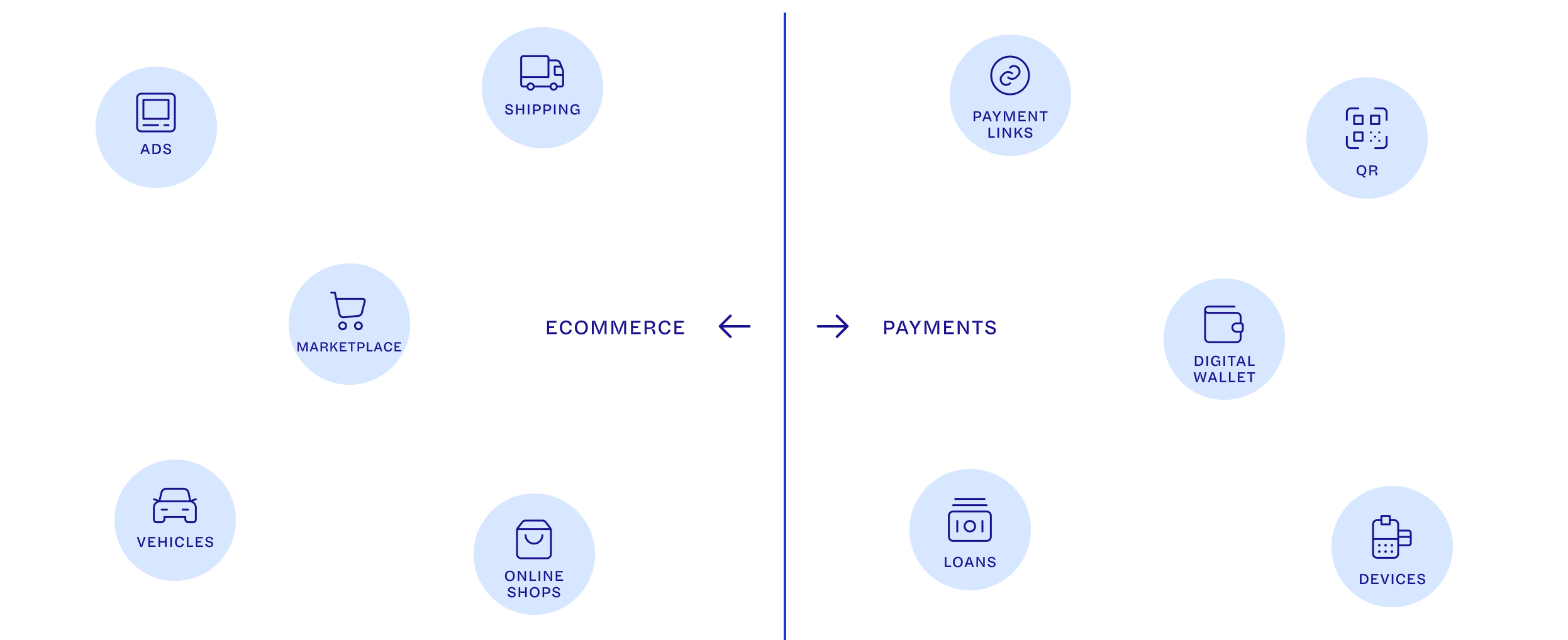
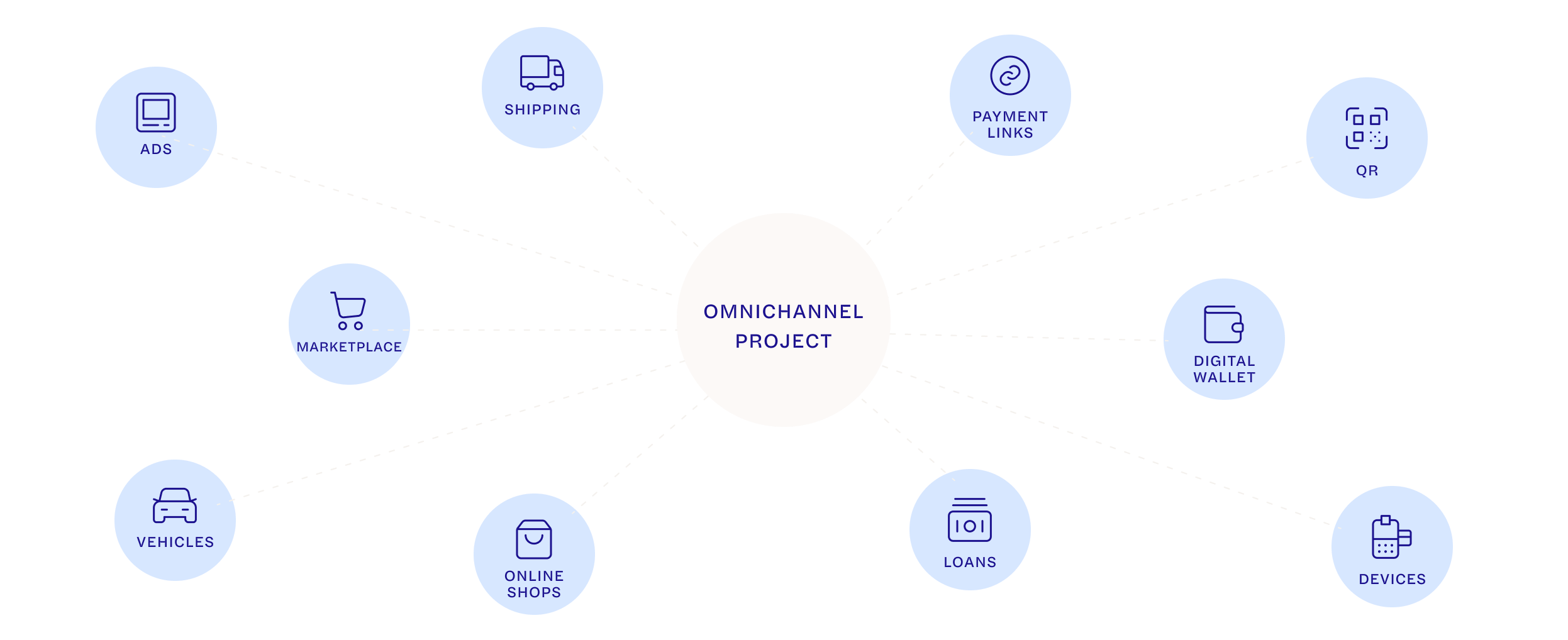
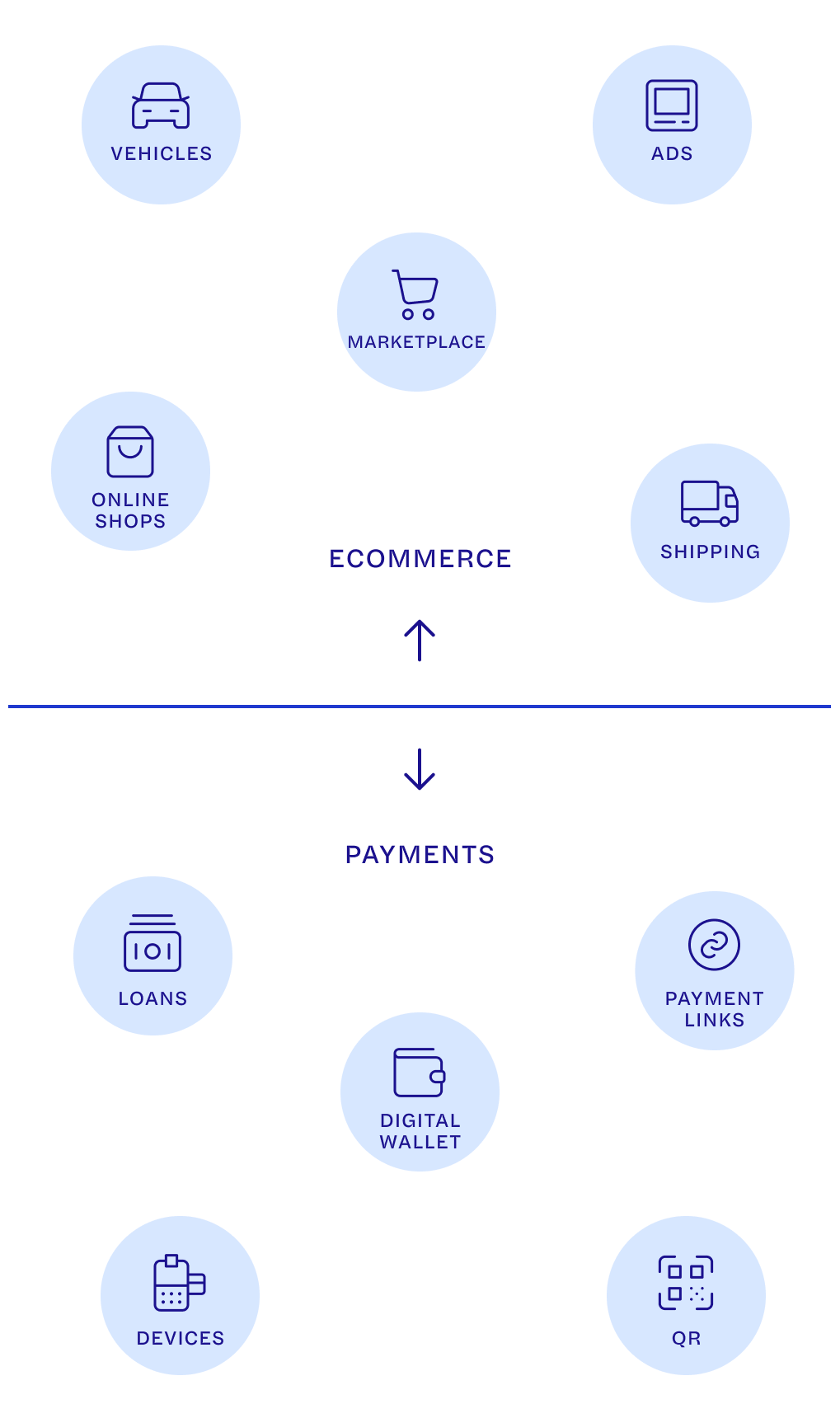
Today the company has a diverse ecosystem of tools. Over the years, the seller's experience has split into two separate universes.
When you build something so big, sometimes things grow apart
Mercado Libre is the e-commerce and payment company with the largest number of users in Latin America. It operates in 18 countries, including Brazil, Argentina, Mexico, Chile, and Colombia. The company's main focus is to generate technological and commercial solutions that are adapted to the cultural and geographic challenges of the region.
Today the company has a diverse ecosystem of tools. Over the years, the seller's experience has split into two separate universes.
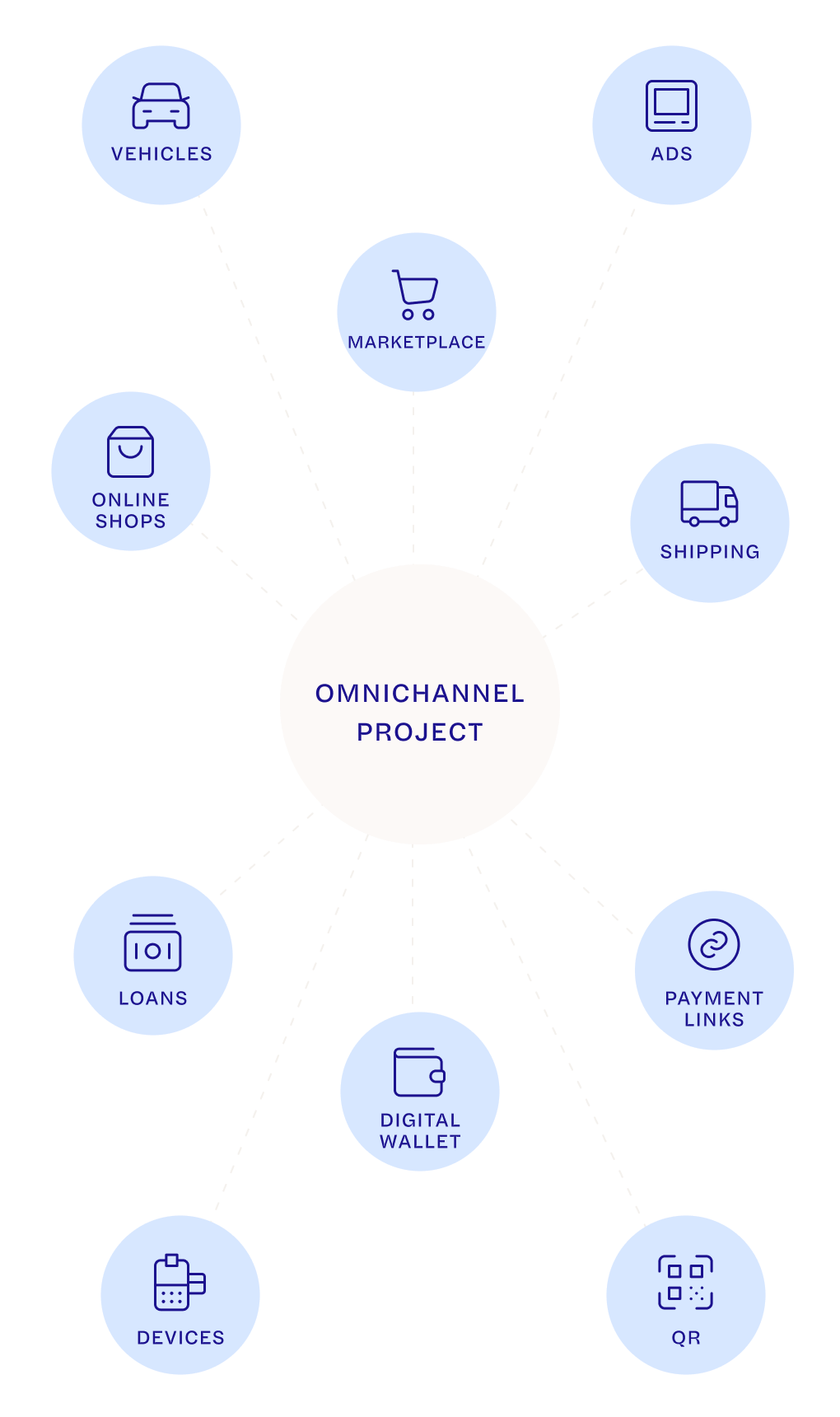
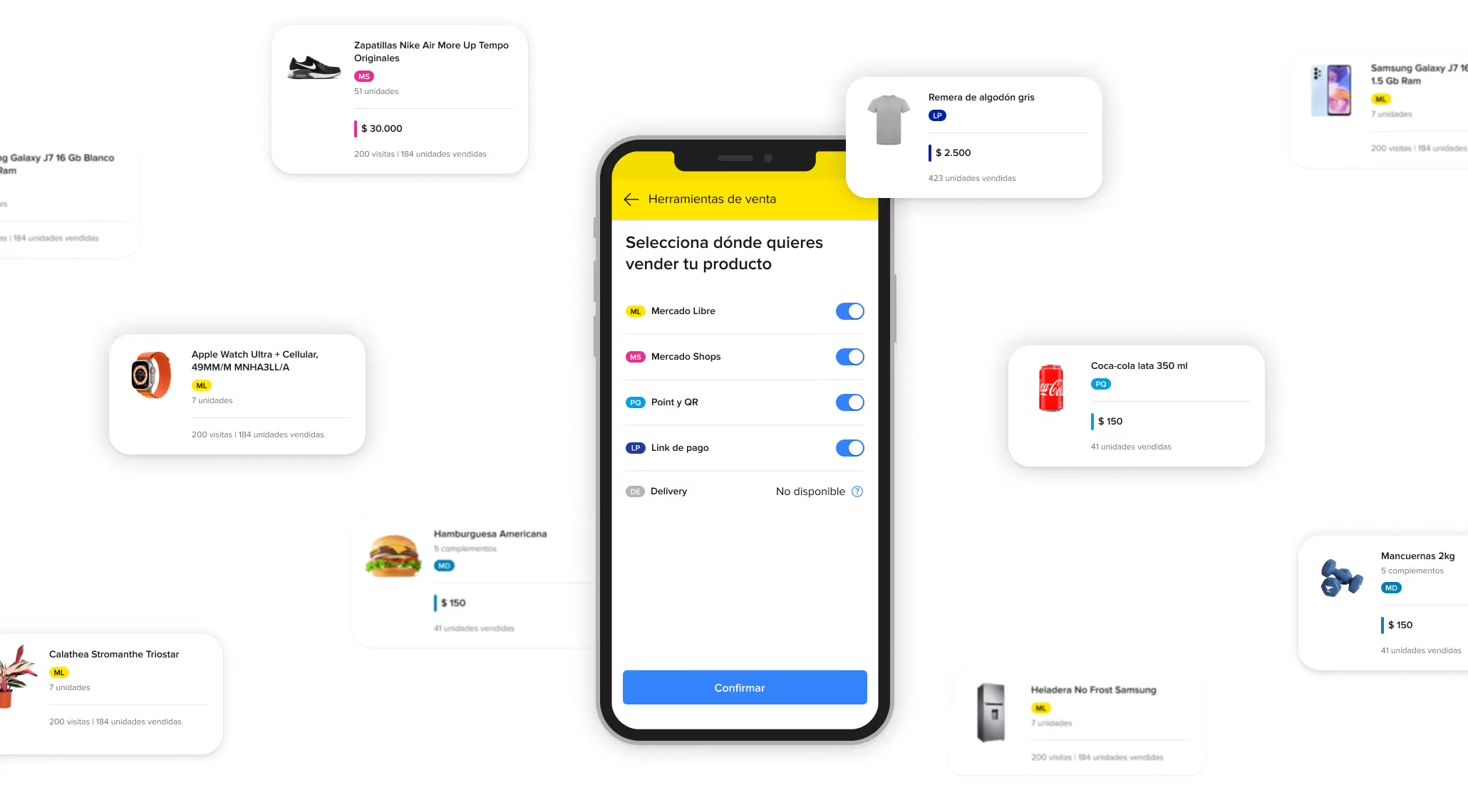
Design a single experience for uploading and modifying products across all tools
On Mercado Libre, you can sell anything from hamburgers to computers. We have an immense diversity of products that require different specifications when they’re uploaded to the platform. However, each tool has specific business rules that often contradict those of another tool. As a result, simplifying the process of uploading products was a complex puzzle to solve.
Why was it a challenge?
01
Endless use cases depending on the type of user, the product and the selling tool.
02
Different kinds of information requested in each case.
03
Despite that, we needed to streamline every flow to avoid a tedious and time-consuming process.
Identifying similarities and differences between tools to streamline the process
Who are the users? What flows do we currently have? What flows would arise from the combination of tools? When could we unify information to have easier flows to navigate? We began to answer these questions by constructing user flows with abstract data.
By taking the time to analyze each flow, we were able to better understand the challenges that sellers were facing and identify key areas to pay attention to.
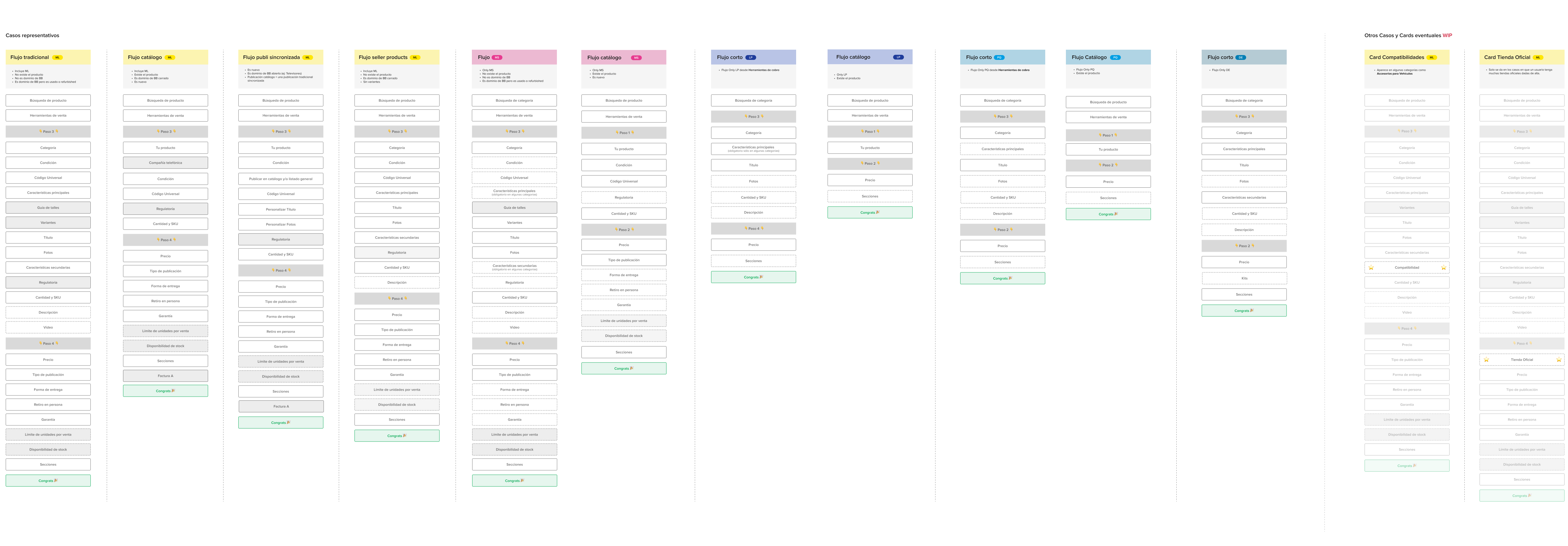
We conducted an analysis of publishing flows across different tools.
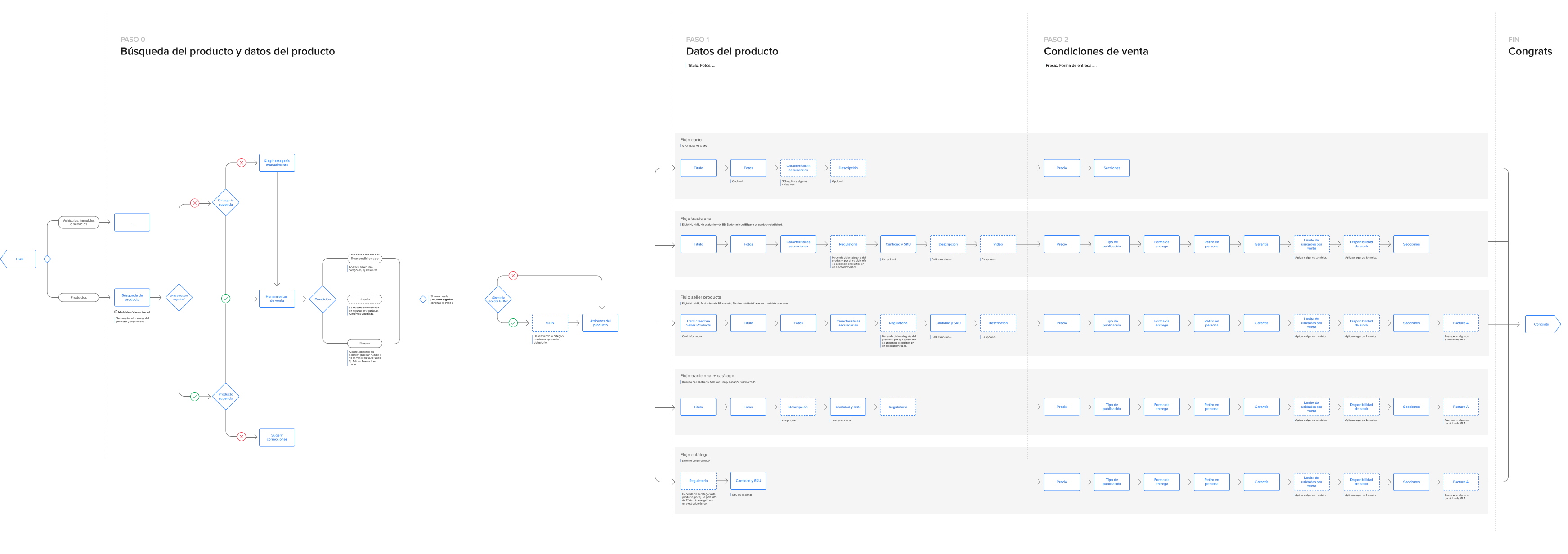
We defined four paths with different levels of complexity depending on the tool.
Navigating through a variety of scenarios
We realized that we needed to design an experience that would be effective in both simple and extremely complex situations. That's why we adopted an atomic design approach. We took every piece of data we needed to ask the user for and treated it as an atom.
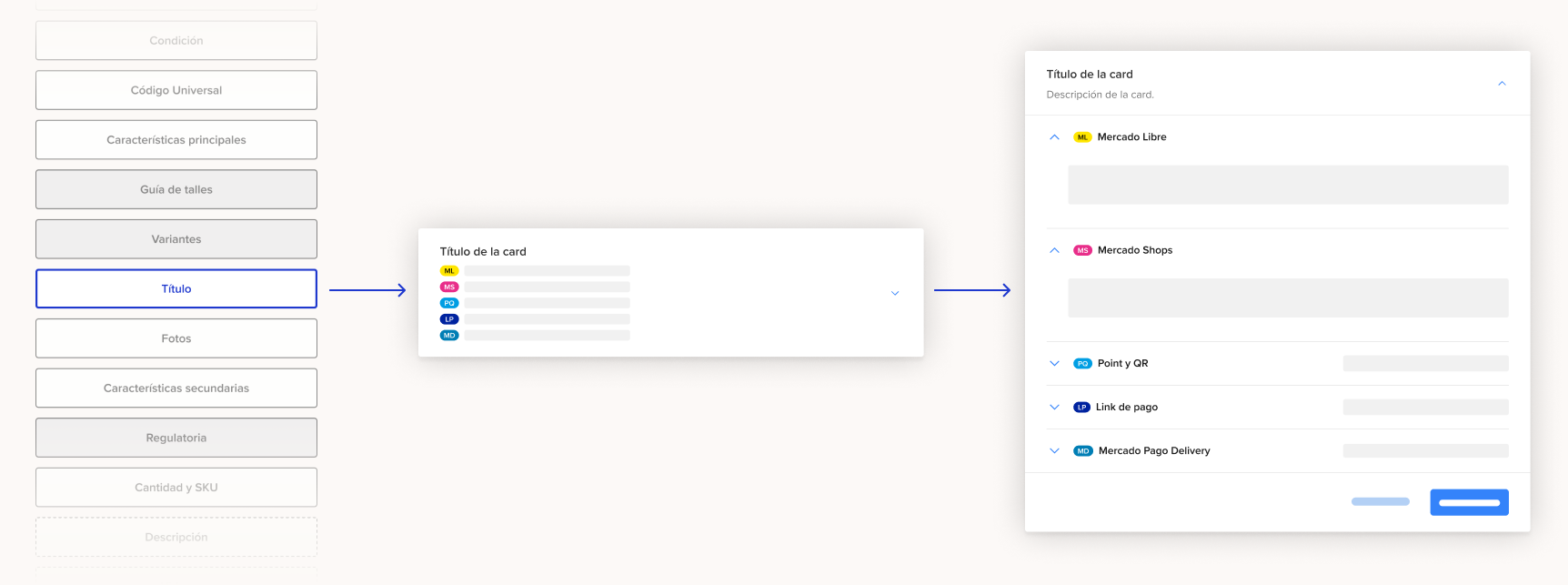
What were our rules?
consistency
The structure of the cards remained the same, adapting to different types of data.
Flexibility
We requested each piece of data on a separate card, which made it easy to customize different types of flows.
efficiency
We designed exactly the same cards for publishing and modifying. This took advantage of the user's learning curve and significantly reduced development costs.
Designing and iterating collaboratively
Every designer and UX writer worked together to prepare detailed proposals that could be discussed with the team. To ensure that the project was moving along smoothly, we held two weekly meetings for design critiques. This allowed us to analyze our progress and identify potential areas for improvement. The feedback we received during these meetings was invaluable and greatly enriched the project.
Once we had a solid foundation in place, we brought the project to each business unit that was impacted by the card. This allowed us to detect any constraints or potential issues that needed to be addressed. By taking a proactive approach to identifying potential issues, we were able to ensure that the project was feasible and successful in the long run.
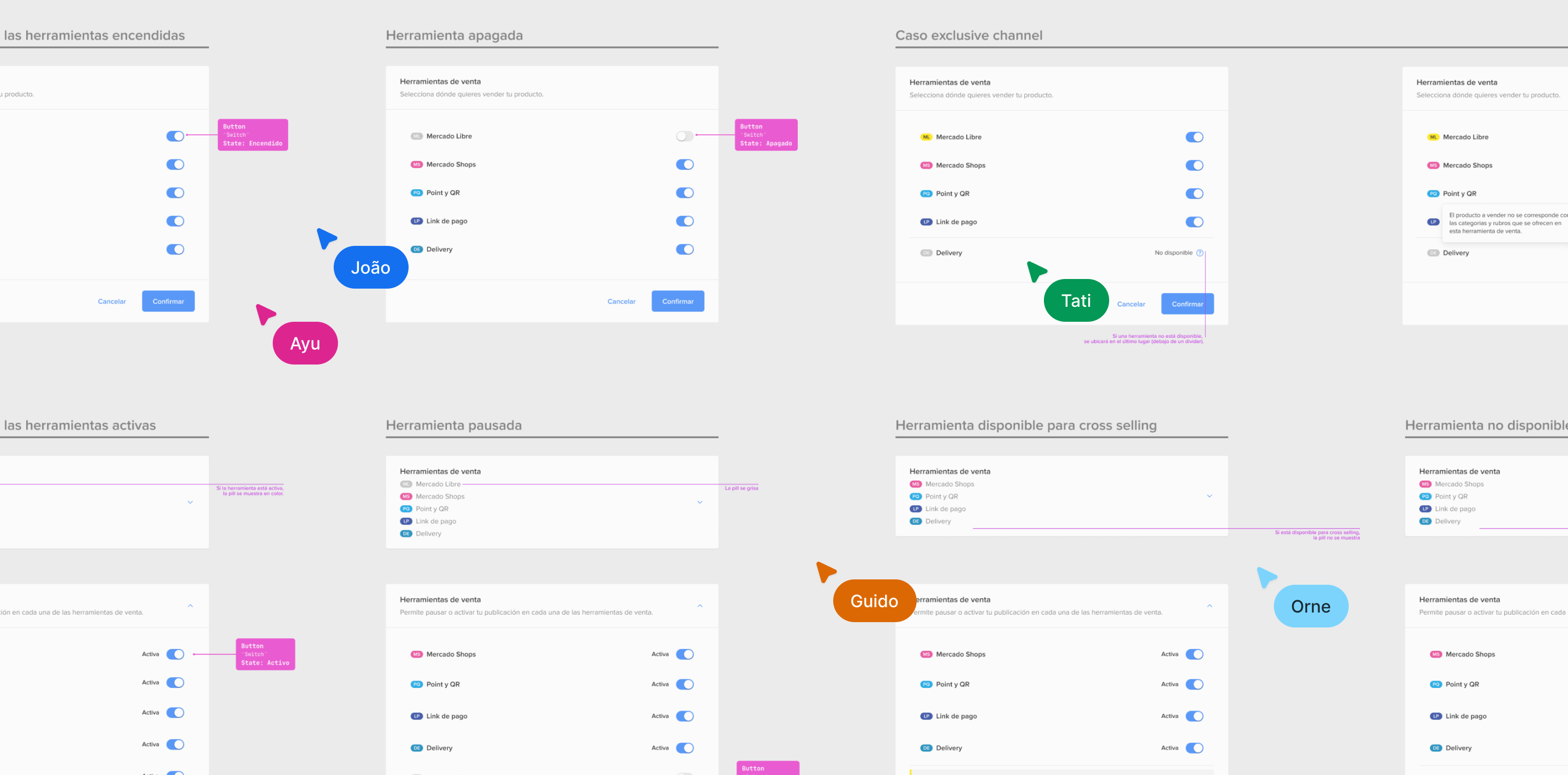
Working together during a design critique
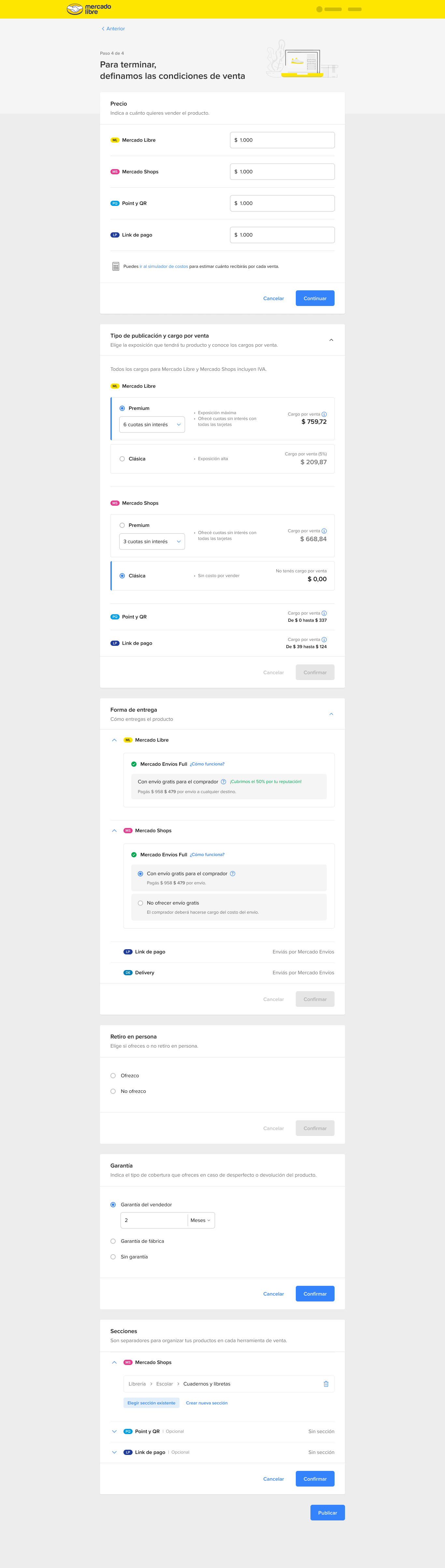
Putting it all together and refining
Once we had the flows assembled, we decided to conduct 10 user tests to identify any usability issues. To guarantee the accuracy of our research, I worked closely with a research consultant to elaborate a script and a high-fidelity prototype.
Our efforts paid off, as we received incredibly valuable feedback from our test participants which allowed us to refine the flow of our project and make it even more intuitive for users.
Working alongside the development team
In the handoff to development, we specified the different use cases of the cards in detail to ensure that they would meet the needs of users in a variety of scenarios.
One of the best parts of this project was the collaboration with the developers. We carried out implementation checks on a weekly basis to ensure that the cards were functioning correctly and meeting all of the required specifications. Any issues that arose were quickly identified and addressed, and we continuously refined and improved the cards over time to ensure the best possible user experience.
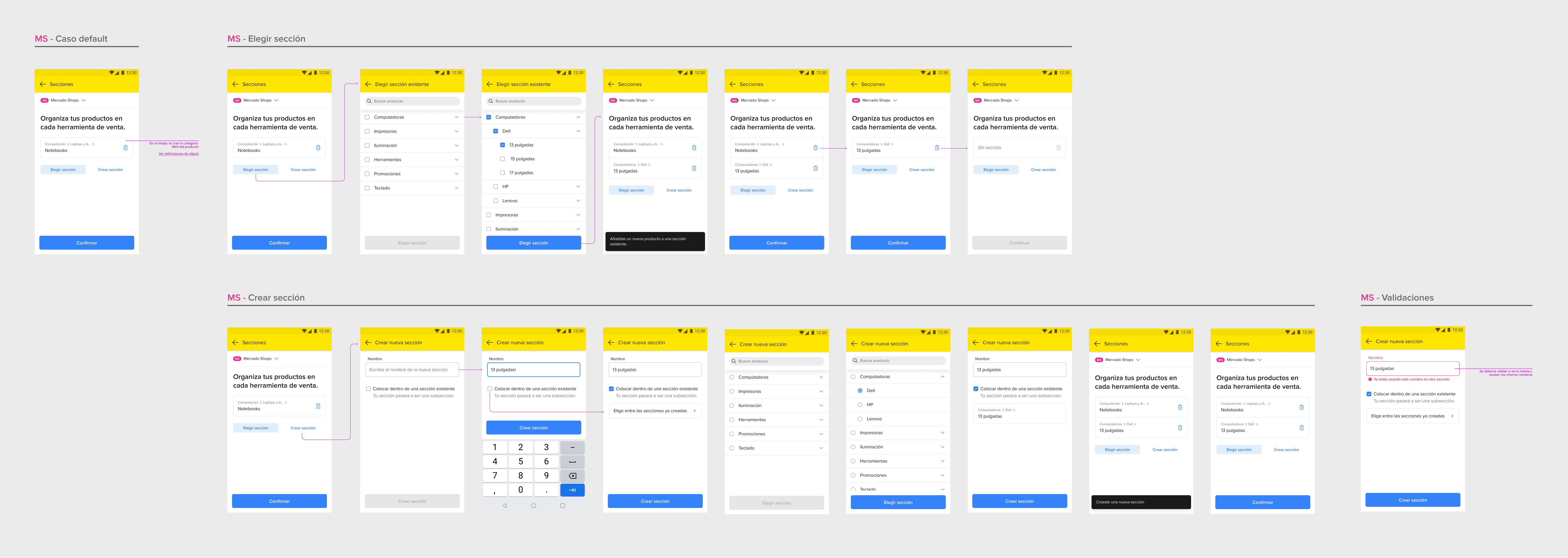
In addition to use cases, we took accessibility information into account. This was done through careful design and testing, as well as consultation with experts in the field.
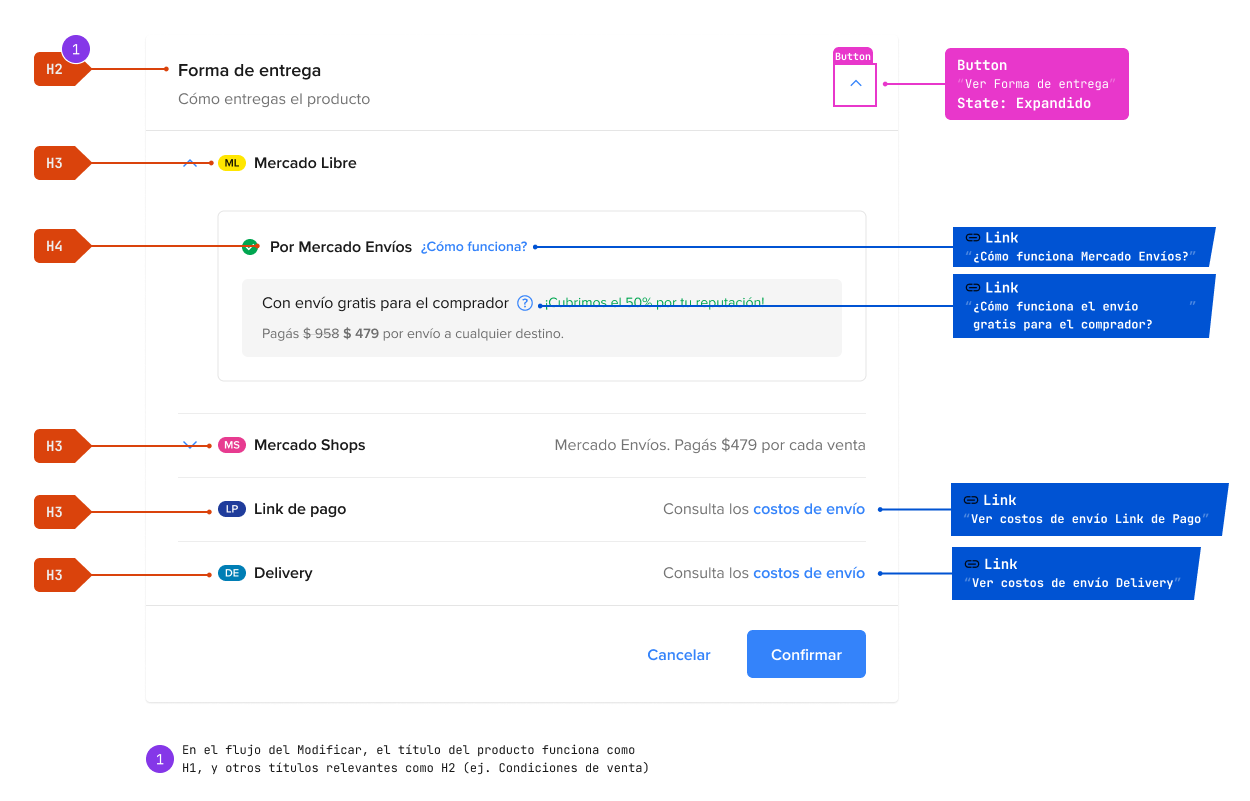
Accessibility indications
Keeping things simple is a challenging task
Every minute, hundreds of products are published on Mercado Libre. It is not the same to upload a refrigerator as it is uploading a hamburger, and each product requires its own set of specific details to be published. Nevertheless, the same flow had to accommodate both cases, which required a careful balance between simplicity and functionality.
On the other hand, each business unit had different objectives, and developing a system that supported all of them –by integrating each of their realities– required numerous agreements with different teams. I learned so much in every debate, being very conscious that I was privileged to be part of a team that takes every decision so seriously.
Working with my colleagues on this project was an invaluable experience. It gave me the opportunity to work with experts from different areas and to learn from their experience, which broadened my perspective and helped me become a more versatile professional.
“
Maca is always very participative and collaborative in the different stages of the project, she demonstrated a lot of maturity when discussing the results and needs of design iterations. Great listening skills of feedback, always with good humor while identifying and analyzing opportunities.
ayelén santamaría · ux Project leader